Closing the Referral Loop: How Digital Health Can Connect PHCs to Specialists in Nigeria

RN Vincent Favour Chialuka
Clinical onboarding officer
10 min read

Oct 21, 2026

0 Comments
6
0
Closing the referral loop keeps patients from getting lost between PHCs and specialists in Nigeria. See where referrals break and how MedixDeck can help.
Every day in Nigeria, a health worker at a primary health centre (PHC) does the right thing. They recognise a case beyond their scope and refer the patient on. Then the system goes quiet. The patient leaves with a slip of paper, and no one confirms whether they reached a specialist, what was found, or whether treatment began.
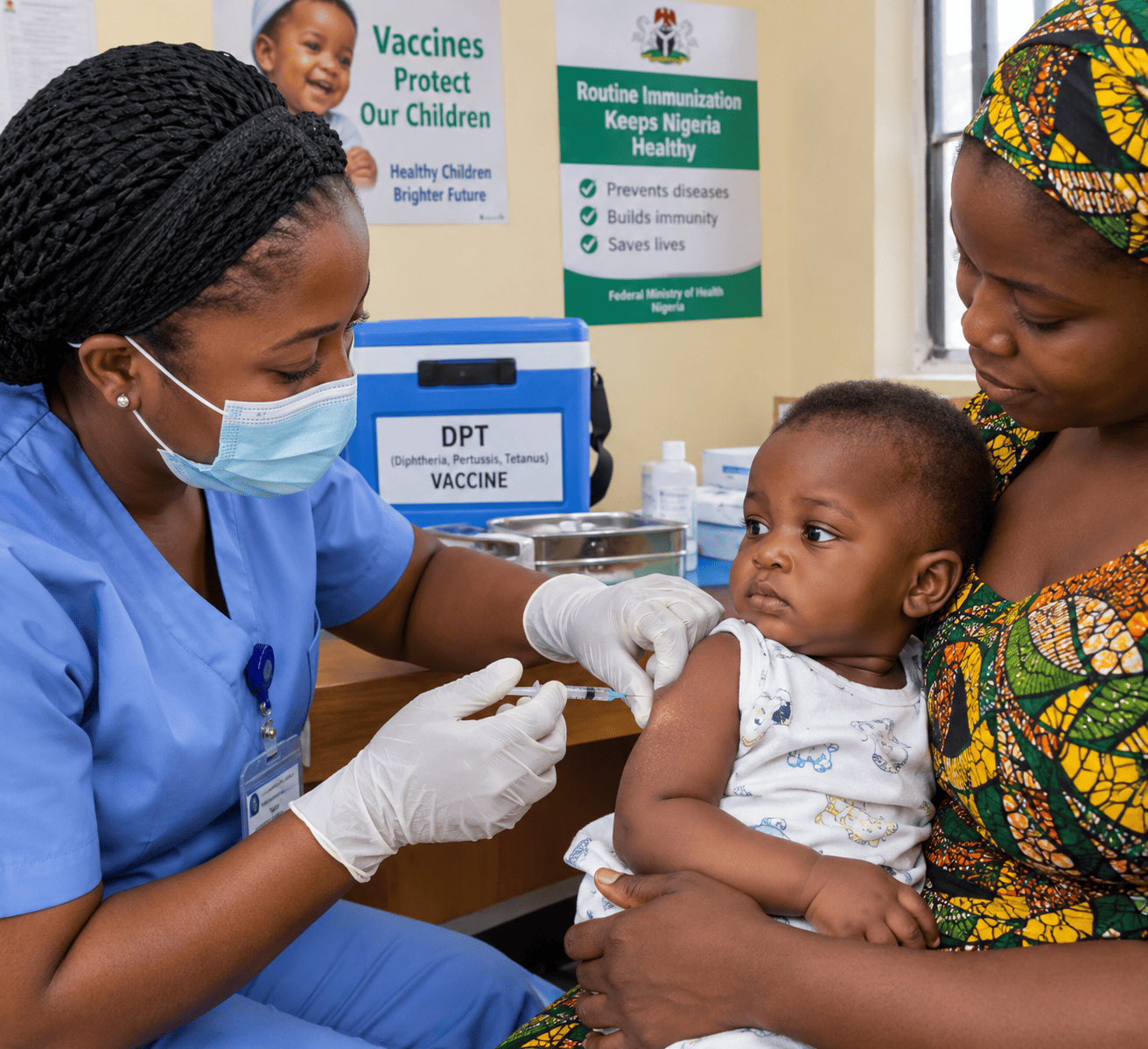
Closing the referral loop means making sure information travels both ways: from the PHC to the specialist, and back again. MedixDeck is building toward exactly that. This article explains where referrals break down in Nigeria, why it matters, and what a connected referral pathway could look like.
What does closing the referral loop mean?
Closing the referral loop means the referring health worker knows the patient reached the specialist, what the specialist found, and what happens next. Information moves from PHC to specialist and back to the PHC, so the patient never drops out of care between facilities.
A referral is more than a note or a suggestion to visit another hospital. In practice, it is a transfer of responsibility and clinical information from one level of care to another. When that transfer happens on paper alone, much of it gets lost along the way.
PHC → Specialist → PHC
Why do referrals fail in Nigeria?
Most referrals in Nigeria fail not because clinicians do not care, but because nothing connects the facilities. The PHC network is uneven, specialists are scarce, and referral details usually travel on paper in the patient's hand.
How many PHCs in Nigeria are actually functional?
Nigeria had 34,076 PHCs in 2023, but a 2025 peer reviewed review estimated that only about 20 per cent of them were functional. Since then, the picture has improved. In September 2026, the Federal Ministry of Health and Social Welfare reported that functional primary healthcare facilities had risen from over 8,000 to over 16,000.
That is real progress. However, the same ministry official stressed that new facilities must be matched by investment in health workers, and noted that insecurity has shut some health posts. As a result, many communities still lack a dependable first point of care.
How many doctors does Nigeria have per patient?
Nigeria has roughly one doctor for every 5,000 people, according to the Minister of State for Health and Social Welfare in November 2025, against a WHO benchmark of 1:600 that the ministry cited. Consequently, specialists are stretched thin, and patients often skip the PHC and go straight to secondary and tertiary hospitals.
This pattern is expensive. One investigation, citing the Nigeria Health Sector Market Study, reported that 84 per cent of primary health care spending in 2017 went to non PHC facilities. In other words, care that could happen close to home was delivered at the most costly level of the system.
What are the 5 points where a referral usually breaks down?
- No clear pathway. The patient gets a note but no named facility, specialist, or booked slot.
- Incomplete information. History, medications, and investigation results do not reach the specialist on time.
- Delays and repeat costs. The patient travels, queues, repeats their history, and sometimes repeats tests.
- No feedback. The specialist's findings and plan never return to the referring PHC.
- No follow up. The PHC cannot tell whether the patient was seen, treated, or lost.
Why does closing the referral loop matter?
Closing the referral loop protects continuity of care. Patients avoid repeat consultations and duplicate tests, specialists start with complete information, and the PHC continues management with a clear plan.
Each person in the chain gains something:
- For patients: fewer wasted journeys, less cost, and no need to retell their story at every stop.
- For PHC health workers: confirmation that the patient was seen, plus a plan they can follow.
- For specialists: context before the consultation, so time goes to clinical decisions rather than reconstructing history.
- For the health system: visibility into how patients actually move between levels of care.
How does a paper referral compare with a digital referral?
A digital referral replaces the paper slip with a shared, trackable record, so information and feedback flow in both directions. The table below shows the difference at each step.
| Step | Paper referral | Digital referral |
|---|---|---|
| Sending information | Handwritten note carried by the patient | Structured record shared securely between authorised users |
| Reaching the specialist | Patient travels, then queues | Specialist reviews the case first; teleconsultation where appropriate |
| Tracking | None | Referral status visible to the referring PHC |
| Feedback | Rarely returns | Recommendations sent back to the PHC |
| Follow up | Depends on the patient returning | PHC knows when and how to follow up |
What could a digital referral platform let a PHC do?
A digital referral platform could let a PHC send, track, and follow up a referral without relying on paper or phone calls. Specifically, it could allow a PHC to:
- Create and submit a referral electronically.
- Share relevant clinical history and the reason for referral.
- Attach investigation results and supporting information.
- Identify and connect with an appropriate specialist.
- Track the status of the referral.
- Receive the specialist's recommendations or care plan.
- Follow up with the patient after specialist care.
The goal is not simply to digitise paperwork. Rather, it is to connect the people and processes involved in a patient's care.
How does MedixDeck connect PHCs to specialists?
MedixDeck's vision is a digital bridge that links PHCs to the specialists their patients need, turning a referral into a connected journey instead of a slip of paper. MedixDeck is a Nigerian telehealth platform, now in prelaunch, built so patients can see a licensed doctor online with no queue and no commute. The referral pathway below extends that same promise to PHCs.
Picture it. A PHC nurse meets a case that needs specialist input. Instead of writing a note, the nurse opens a referral on MedixDeck in minutes and attaches the history, vitals, and findings. The case reaches the right specialist, who can often review it and consult the patient by video or chat the same day.
For many patients, that means expert guidance without a long, costly journey. For those who must be seen in person, it means arriving with a booked slot and a complete file: no queue, no repeated history, no lost paperwork.
Identify → Refer → Connect → Treat → Feedback → Follow up
The aim is not to replace the PHC or the specialist. Instead, it is to strengthen the relationship between them, so frontline workers can reach specialist expertise and specialists can send recommendations back.
What must a digital referral system get right in Nigeria?
A digital referral system in Nigeria must protect patient data, work despite unreliable power and internet, and fit into health workers' existing workload. Above all, technology should support clinical judgement, not replace it.
Nigeria has no dedicated telemedicine law yet. Instead, telehealth platforms operate under existing laws, including the Nigeria Data Protection Act 2023, which requires registration with the Nigeria Data Protection Commission, according to a 2025 legal review. In practice, a referral system for Nigerian PHCs needs:
- Patient privacy and data protection in line with the Nigeria Data Protection Act 2023.
- Patient consent before information is shared between facilities.
- Secure access and user authentication, so only authorised clinicians see records.
- Low bandwidth and offline friendly design, because many PHCs have unreliable power and connectivity.
- Interoperability with existing health records and reporting systems.
- Clear clinical accountability at every handover.
- Simple workflows, so the system saves time for already stretched staff instead of adding work.
Diagnosis, treatment decisions, and clinical responsibility remain with qualified professionals. The technology simply carries the information and keeps everyone connected.
How does closing the referral loop put the patient back at the center?
Closing the referral loop puts the patient at the center because every person involved knows the next step. Ultimately, the purpose is not technology. It is the patient.
When the loop closes, the patient no longer has to keep retelling their story. Similarly, the PHC no longer wonders whether the patient reached the next level of care. The specialist no longer starts with incomplete information. Meanwhile, the health system finally sees how patients move between facilities.
What does the future of referrals in Nigeria look like?
The future of referrals in Nigeria depends on connection, not just more facilities. As the number of functional PHCs grows, more patients will be referred onward, and the cost of an open referral loop will grow with them.
Digital referrals, teleconsultation, electronic records, and referral tracking can turn that growth into coordinated care. For communities where specialists are far away, this connection could be the difference between a patient getting help and a patient getting lost.
Closing the referral loop is, in the end, about closing a gap in care. When health workers are better connected, patients experience healthcare as one continuous journey rather than a series of disconnected visits.
Join us in closing the loop
MedixDeck is preparing to launch, and now is the time to help shape the referral pathway. PHCs, specialists, HMOs, and partners: let's build it together. Visit MedixDeck to learn more and get in touch before launch.**
MedixDeck: Connecting Healthcare.
Frequently asked questions about closing the referral loop
What is a referral loop in healthcare?
A referral loop is the full path a referral should follow: the primary health worker refers the patient, the specialist receives the information and manages the patient, and feedback returns to the referring facility. The loop is closed only when the referring health worker knows the outcome and the plan for continued care.
Why is the referral system in Nigeria weak?
Nigeria's referral system is weak mainly because facilities are not connected. Many PHCs are not fully functional, specialists are scarce, and referral details usually travel on paper with the patient. As a result, information gets lost, patients bypass PHCs for hospitals, and feedback rarely returns to the referring health worker.
How many functional PHCs does Nigeria have?
The Federal Ministry of Health and Social Welfare reported in September 2026 that functional primary healthcare facilities had risen from over 8,000 to over 16,000. For context, a 2025 review counted 34,076 PHCs in 2023, with only about 20 per cent functional at that time. Figures vary by source and definition.
What is a digital referral system?
A digital referral system replaces the paper referral slip with a secure electronic record. Authorised health workers can send clinical history and results, track the referral, and receive the specialist's recommendations. Therefore, information moves in both directions, and the referring facility stays informed about what happened to the patient.
Can telemedicine replace a visit to a specialist?
Telemedicine can resolve some specialist referrals through a video or chat consultation, especially when the specialist mainly needs history and results. However, it cannot replace an in person visit when a physical examination, procedure, or admission is needed. In those cases, it helps the patient arrive with a booked slot and complete file.
Is patient data safe on telehealth platforms in Nigeria?
Patient data on Nigerian telehealth platforms is protected under the Nigeria Data Protection Act 2023, which treats health data as sensitive. Platforms are expected to register with the Nigeria Data Protection Commission, secure access, and obtain consent. Nigeria has no dedicated telemedicine law yet, so data protection rules carry much of the weight.
Table of Contents
Stay informed on health trends
Join over 1,000 Nigerians receiving weekly verified medical insights directly from RN Vincent Favour Chialuka and our team of experts.