Diphtheria Prevention: What Families, Schools and Healthcare Workers Can Do

RPDN Madara Effiong Benson
Registered Paediatric Nurse
12 min read

Oct 14, 2026

0 Comments
7
0
Diphtheria prevention starts with vaccination. Learn the warning signs and what families, schools and health workers in Nigeria should do.
A Sore Throat in a child, a sore throat rarely feels like an emergency. However, in parts of Nigeria right now, it can be the first sign of diphtheria, a disease most families thought belonged to the past.
The good news is that diphtheria prevention works. This guide explains what diphtheria is, the warning signs to watch for, and the practical steps families, schools, healthcare workers, and community leaders can take. MedixDeck, a Nigerian telehealth platform preparing to launch, brings you this guide.
What is Diphtheria?
Diphtheria is a serious but preventable bacterial infection caused by toxin-producing strains of Corynebacterium diphtheriae. It mainly affects the throat and upper airway, and its toxin can damage the heart and nerves.
Anyone who is unvaccinated or under-vaccinated is at risk. Without proper treatment, diphtheria can kill around 30 percent of unvaccinated people who get it, and children under 5 face the highest risk of dying.
Why Does Diphtheria Prevention Matter in Nigeria Right Now?
Diphtheria prevention matters because Nigeria has battled a large diphtheria outbreak since 2022, and most of those affected are unvaccinated children. Between May 2022 and January 2026, the Nigeria Centre for Disease Control and Prevention (NCDC) recorded the following:
| Indicator (May 2022 to January 2026) | Figure |
|---|---|
| Suspected cases | 61,894 from 37 states |
| Confirmed cases | 40,426 |
| Deaths among confirmed cases | 2,151 (case fatality rate 5.3%) |
| Confirmed cases aged 1 to 14 years | 65.3% |
| Confirmed cases fully vaccinated | Only 14.3% |
The wider picture explains why. Globally, about 85 percent of infants completed three doses of diphtheria, tetanus, and pertussis (DTP3) vaccine in 2025. Yet West and Central Africa had the lowest coverage of any UNICEF region, at just 71 percent. In addition, an estimated 13.5 million children worldwide did not receive even a first dose in 2025.
These gaps are exactly where outbreaks begin. Consequently, prevention requires coordinated action by families, schools, healthcare workers, communities, and public health authorities.
What are the Warning Signs of Diphtheria?
The warning signs of diphtheria usually start 2 to 5 days after exposure and look like an ordinary sore throat at first. Within a few days, a thick grey coating can form over the throat, tonsils, or nose, making breathing and swallowing difficult. Watch for:
- Sore throat
- Fever
- Weakness or unusual tiredness
- Swollen neck glands
- Difficulty swallowing
- Hoarseness
- Difficulty breathing
- A thick grey or white coating in the throat or nose
A rapidly worsening sore throat with neck swelling or breathing difficulty needs urgent medical assessment. Early treatment considerably reduces the risk of complications and death.
What Should Families Do to Prevent Diphtheria?
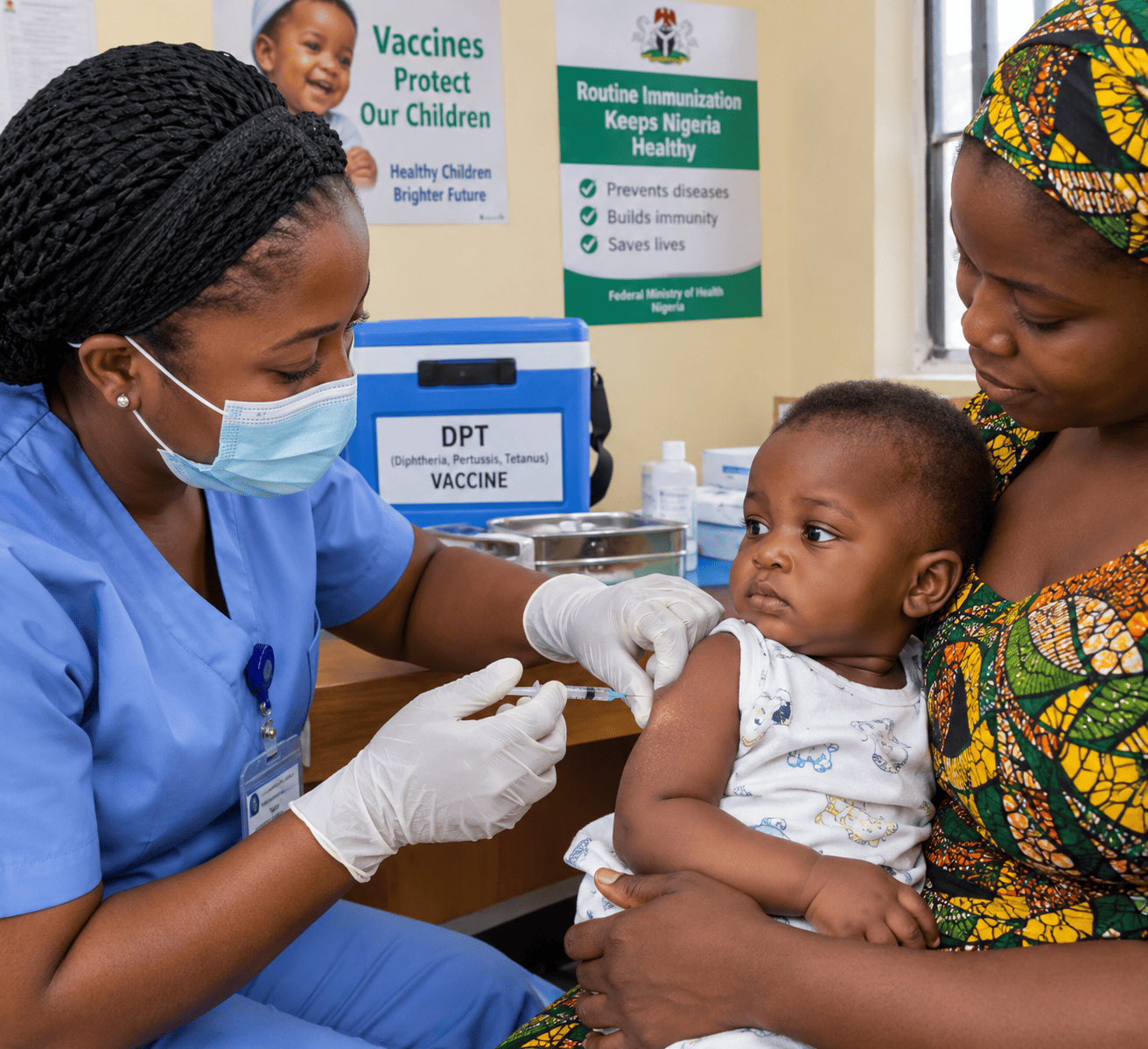
Families are the first line of defense. The most important thing parents and caregivers can do is make sure every child completes every recommended vaccine dose on time.
Which Vaccines Protect Children from Diphtheria in Nigeria?
In Nigeria, children receive the pentavalent vaccine according to the NPHCDA routine immunization schedule, which protects against diphtheria, tetanus, and pertussis among other diseases, at 6, 10, and 14 weeks of life. Recommended boosters should follow. If your child has missed a dose, speak to an immunization provider about catching up. Adults should also check that their own vaccinations are up to date.
Why Should You Keep Your Child's Vaccination Card?
Your child's immunization card shows health workers exactly which doses are complete and which are missing. Therefore, keep it safe and bring it to:
- Clinic visits
- School enrollment
- Immunization campaigns
- Hospital appointments
- Community vaccination activities
If the card is lost, ask a healthcare professional for advice on the next steps.
Should You Remove a Throat Membrane at Home?
No. Never try to scrape or pull off a suspected membrane in a child's throat. Doing so can cause bleeding and make the situation worse. Instead, take the child for urgent professional assessment.
How Do You Stop Diphtheria Spreading at Home?
You stop diphtheria spreading at home by limiting close contact with the sick person and getting every household member assessed. Diphtheria spreads through coughs and sneezes, and some people carry the bacteria without feeling sick. Families can reduce transmission by:
- Avoiding close contact with a person suspected or confirmed to have diphtheria until health workers give guidance.
- Not sharing cups, utensils, or other items that touch saliva or nasal secretions.
- Washing hands regularly.
- Covering coughs and sneezes.
- Following isolation instructions from health and public health authorities.
- Completing any prescribed treatment in full.
Household contacts should not wait for symptoms to appear. WHO advises that contacts receive preventive antibiotics and a check of their vaccination status. Visit a registered health facility promptly after any significant exposure.
What Should Schools Do About Diphtheria?
Schools should promote vaccination, spot sick children early, and follow public health instructions during an outbreak. Because schools bring many children together every day, they are important partners in prevention.
How Can Schools Promote Vaccination?
Schools can remind parents to keep children's vaccinations up to date and support legitimate vaccination campaigns. Furthermore, they should share information from health authorities rather than rumors or unverified social media posts.
What Should Teachers Do if a Child Looks Sick?
Teachers do not need to diagnose diphtheria. However, a student who develops any of the warning signs above should be referred promptly for medical evaluation, and parents should be informed.
What Should a School Do if Diphtheria is Confirmed?
School management should follow instructions from the relevant public health authority on exclusion, contact identification, vaccination, and other control measures. In addition, schools should maintain everyday hygiene:
- Working handwashing facilities
- Clean, well-maintained classrooms
- Good ventilation where possible
- Routine cleaning of frequently touched surfaces
- Clear procedures for students who fall ill during school hours
What Should Healthcare Workers Do When They Suspect Diphtheria?
Healthcare workers should treat suspected diphtheria promptly without waiting for laboratory confirmation. WHO advises that testing be done promptly and treatment started as soon as possible, and CDC notes that clinical guidance for diphtheria diagnosis is usually based on clinical presentation.
When Should Healthcare Workers Suspect Diphtheria?
Diphtheria can look like any other throat infection at first. Consider it when compatible symptoms occur, particularly in:
- Unvaccinated or under-vaccinated patients, or those with unknown vaccination status
- Close contacts of confirmed cases
- People living in outbreak areas
- Patients with an adherent membrane in the throat
How Should Specimens Be Handled?
Collect appropriate specimens according to local protocols, and send them through the proper laboratory and surveillance channels. However, specimen collection should never delay treatment when clinical suspicion is high.
What Infection Prevention Measures are Needed?
Isolate suspected respiratory cases and apply standard and droplet precautions in line with local infection prevention protocols. The NCDC Situation Report also recommends early case detection, isolation, and prompt treatment. In practice, healthcare workers should:
- Perform hand hygiene consistently.
- Use appropriate personal protective equipment (PPE), with extra care during airway procedures.
- Handle respiratory and wound specimens safely.
- Maintain good environmental hygiene.
How Should Healthcare Workers Protect Themselves?
Healthcare workers should keep their own diphtheria vaccination up to date, and CDC infection control guidelines encourage vaccinating health personnel in line with routine adult schedules. Anyone exposed to a suspected or confirmed case should report it promptly through the occupational health or public health pathway.
What Happens After a Suspected Case is Reported?
Diphtheria is a notifiable disease, so report every suspected case through local notification procedures immediately. Public health teams may then:
- Confirm and investigate the case.
- Identify close contacts.
- Assess vaccination status.
- Arrange testing where indicated.
- Provide preventive antibiotics to appropriate contacts.
- Vaccinate people who are not fully immunized.
- Monitor contacts for symptoms.
- Implement further outbreak control measures where needed.
Clinicians managing cases should follow the NCDC National Diphtheria Guideline.
What Should Close Contacts of a Diphtheria Patient Do?
Close contacts should get assessed by a health worker straight away, even if they feel well. Exposure does not mean someone will fall ill, but contacts can carry the bacteria without symptoms.
A close contact may include someone who:
- Lives in the same household
- Has frequent close contact with the patient
- Has been exposed to their respiratory secretions
- Has touched infected skin sores or their drainage
According to CDC clinical guidance on managing close contacts, strategies include monitoring for symptoms and providing preventive antibiotics, and contacts whose last diphtheria vaccine was more than 5 years ago should receive another dose. Follow instructions from health professionals rather than self-treating.
How Can Community Leaders Help Prevent Diphtheria?
Community, religious, and traditional leaders can help by encouraging vaccination and countering rumors, because families often trust them more than strangers. In particular, leaders can:
- Encourage routine childhood immunization
- Share information from trusted health authorities
- Support vaccination campaigns
- Encourage early visits to health facilities
- Discourage harmful rumors
- Support public health teams during outbreaks
How Do You Spot Diphtheria Misinformation?
Be cautious of any post claiming that vaccination is unnecessary, that diphtheria is harmless, or that home remedies can replace medical treatment. Instead, get information from the Federal Ministry of Health, NCDC, NPHCDA, WHO, UNICEF, or a licensed healthcare professional, and verify before you share.
How Does Vaccination Protect the Whole Community?
Vaccination protects the whole community because high coverage leaves the bacteria too few people to spread through. WHO recommends that every child receive 3 primary doses of a diphtheria-containing vaccine in infancy, plus 3 boosters in childhood and adolescence.
Diphtheria vaccines are usually given as combination vaccines, alongside protection against diseases such as tetanus, pertussis, Haemophilus influenzae, hepatitis B, and polio. However, WHO reports that only 83 countries include all three recommended boosters in their programmes. As a result, sustained, high coverage across all ages remains central to diphtheria prevention.
What is a Simple Community Action Plan Against Diphtheria?
Everyone has a role. The table below summarizes who does what.
| Community Member | What They Can Do |
|---|---|
| Parents and caregivers | Complete children's vaccinations, keep records, recognize warning signs, and seek care early |
| Children and adolescents | Follow vaccination recommendations and practice good respiratory hygiene |
| Schools and teachers | Promote vaccination, refer sick students, maintain hygiene, and follow public health instructions |
| Healthcare workers | Recognize suspected cases, isolate, start treatment promptly, and notify authorities |
| Healthcare facilities | Maintain infection prevention, ensure proper specimen collection, and coordinate referral and treatment |
| Community leaders | Promote accurate health information and support vaccination activities |
| Public health authorities | Run surveillance, investigate cases, trace contacts, and coordinate outbreak response |
What is the Most Important Thing to Remember About Diphtheria Prevention?
The most important thing to remember is that diphtheria is preventable, and vaccination is the strongest protection. Nigeria's outbreak shows what happens when immunity gaps open up, as NCDC epidemiological data indicates that most affected children were not fully vaccinated.
The steps are simple: vaccinate, recognize symptoms early, seek care promptly, protect close contacts, follow infection control guidance, report suspected cases, and share accurate information. When families, schools, and health workers act together, diphtheria prevention works.
MedixDeck Health Reminder
Urgent Notice: If you or your child has a sore throat with a grey throat coating, neck swelling, or difficulty breathing, go to the nearest health facility immediately. Suspected diphtheria needs in-person emergency care. If you have been in close contact with someone diagnosed with diphtheria, contact a healthcare professional or public health authority promptly for advice on testing, preventive treatment, and vaccination. Do not rely on home remedies or wait for symptoms to become severe.
For everyday health questions, such as whether your family's vaccinations are up to date, MedixDeck is preparing to launch a service that lets you see a licensed doctor online with no queue and no commute.
Frequently Asked Questions About Diphtheria Prevention
What is the best way to prevent diphtheria?
Vaccination is the best way to prevent diphtheria. WHO recommends three primary doses of a diphtheria-containing vaccine in infancy, then three booster doses through childhood and adolescence. In Nigeria, the primary doses come as the pentavalent vaccine at 6, 10, and 14 weeks. Keeping every dose on schedule protects your child and your community.
What are the first symptoms of diphtheria?
The first symptoms of diphtheria usually appear 2 to 5 days after exposure. They include sore throat, fever, weakness, and swollen neck glands. Within a few days, a thick grey coating can form over the throat, tonsils, or nose. Any sore throat with neck swelling or breathing difficulty needs urgent medical care.
How does diphtheria spread?
Diphtheria spreads mainly through droplets when an infected person coughs or sneezes. It can also spread through contact with infected secretions or skin sores. Some people carry the bacteria without feeling sick and can still pass it on. This is why close contacts need assessment even when they feel completely well.
Can you get diphtheria if you are vaccinated?
Vaccinated people can still get diphtheria, but it is much less likely and usually milder. Protection needs multiple doses plus boosters to last. In Nigeria's current outbreak, only about 14 percent of confirmed cases had been fully vaccinated, which shows how strongly complete vaccination protects against the disease.
What should I do if someone in my house has diphtheria?
If someone in your house has diphtheria, contact a health facility or public health officer immediately, even if you feel well. Close contacts usually need preventive antibiotics, a check of their vaccination status, and monitoring for symptoms. Do not wait for symptoms to appear, and do not self-treat with home remedies.
Is diphtheria still a problem in Nigeria?
Yes, diphtheria is still a serious problem in Nigeria. NCDC recorded over 40,000 confirmed cases and 2,151 deaths between May 2022 and January 2026, mostly among unvaccinated children aged 1 to 14. Kano, Borno, Bauchi, Yobe, and Katsina have carried most of the burden.
Table of Contents
Stay informed on health trends
Join over 1,000 Nigerians receiving weekly verified medical insights directly from RPDN Madara Effiong Benson and our team of experts.